Product Design & Development
The balance between business requirements and usability
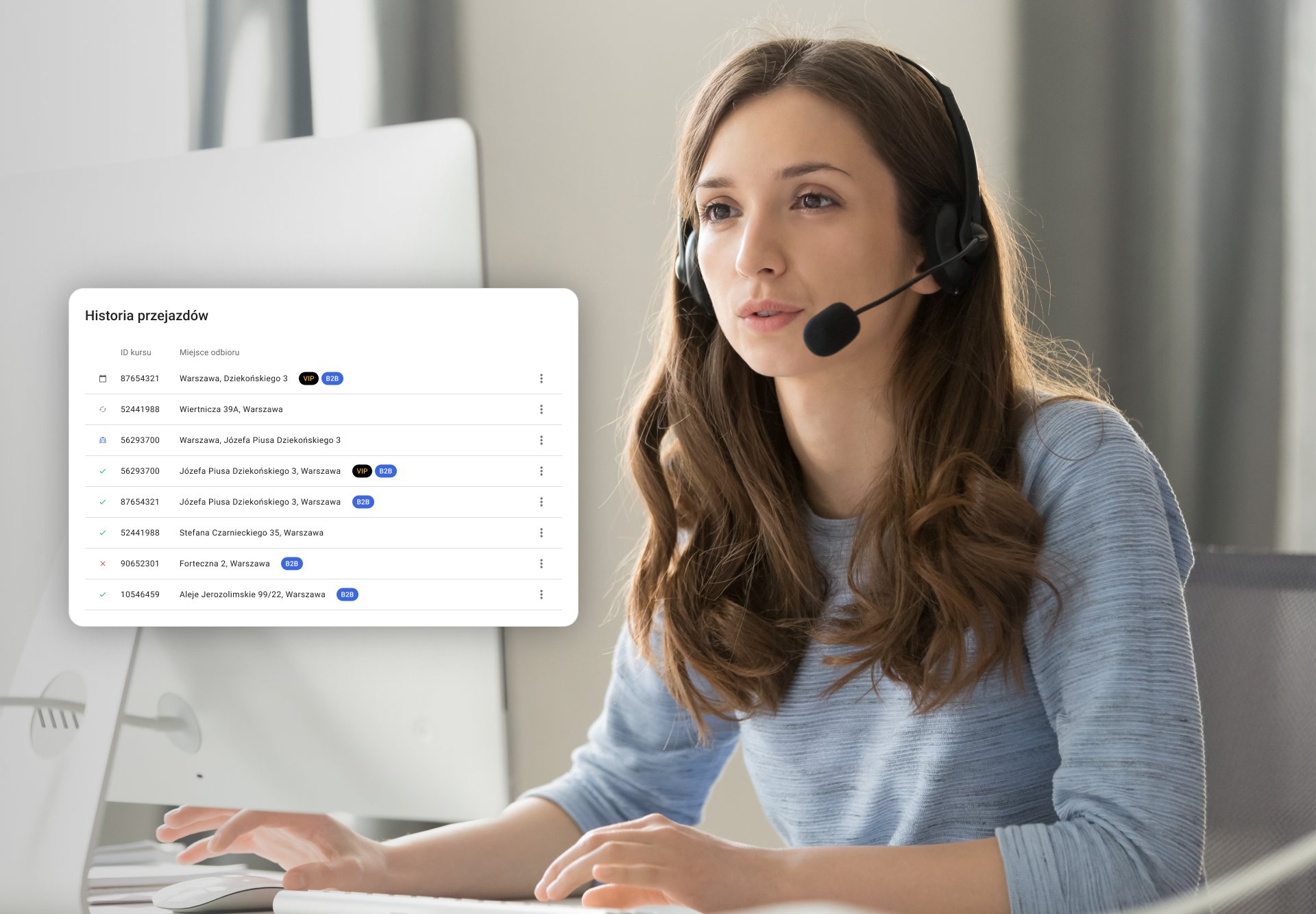
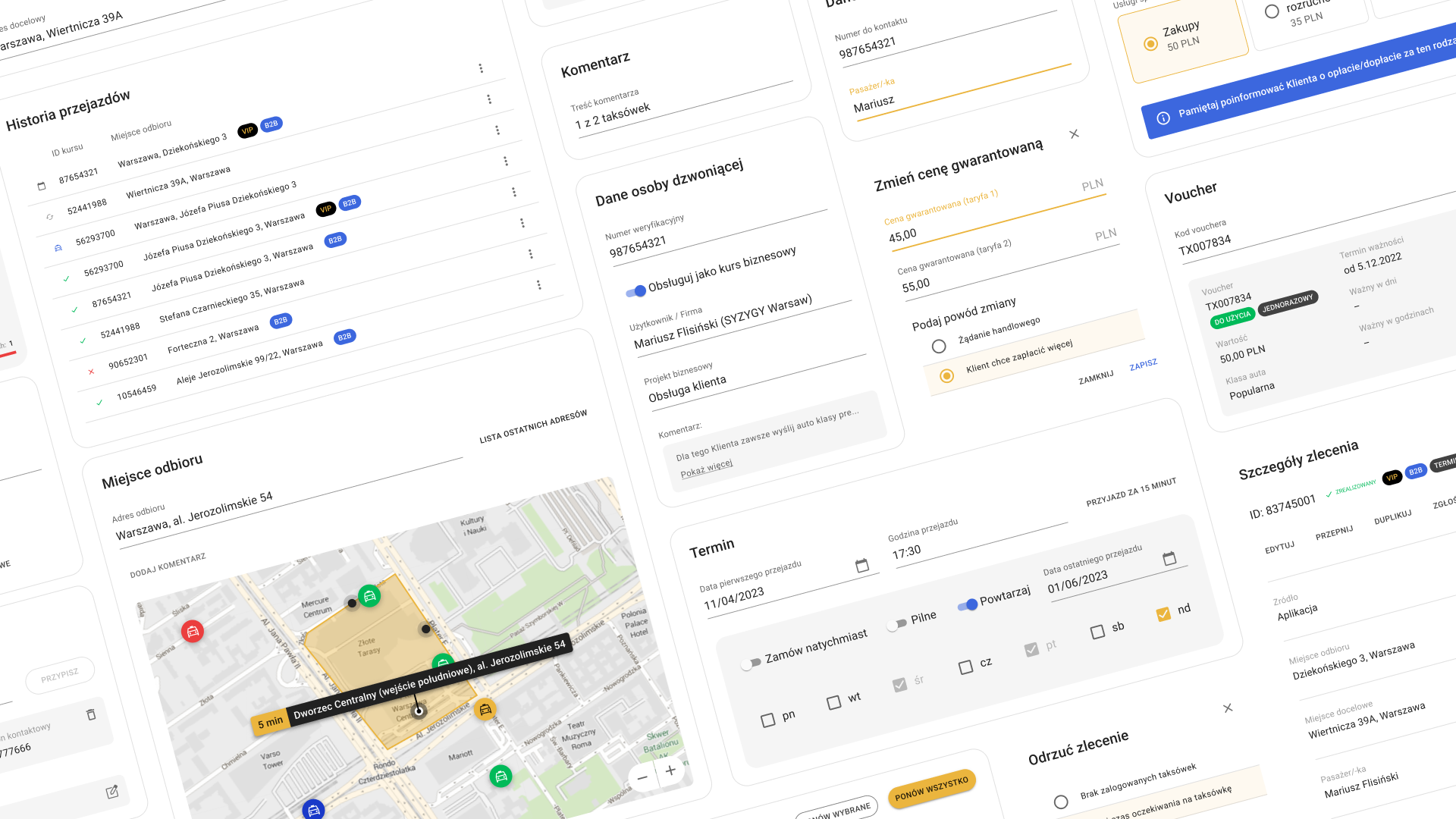
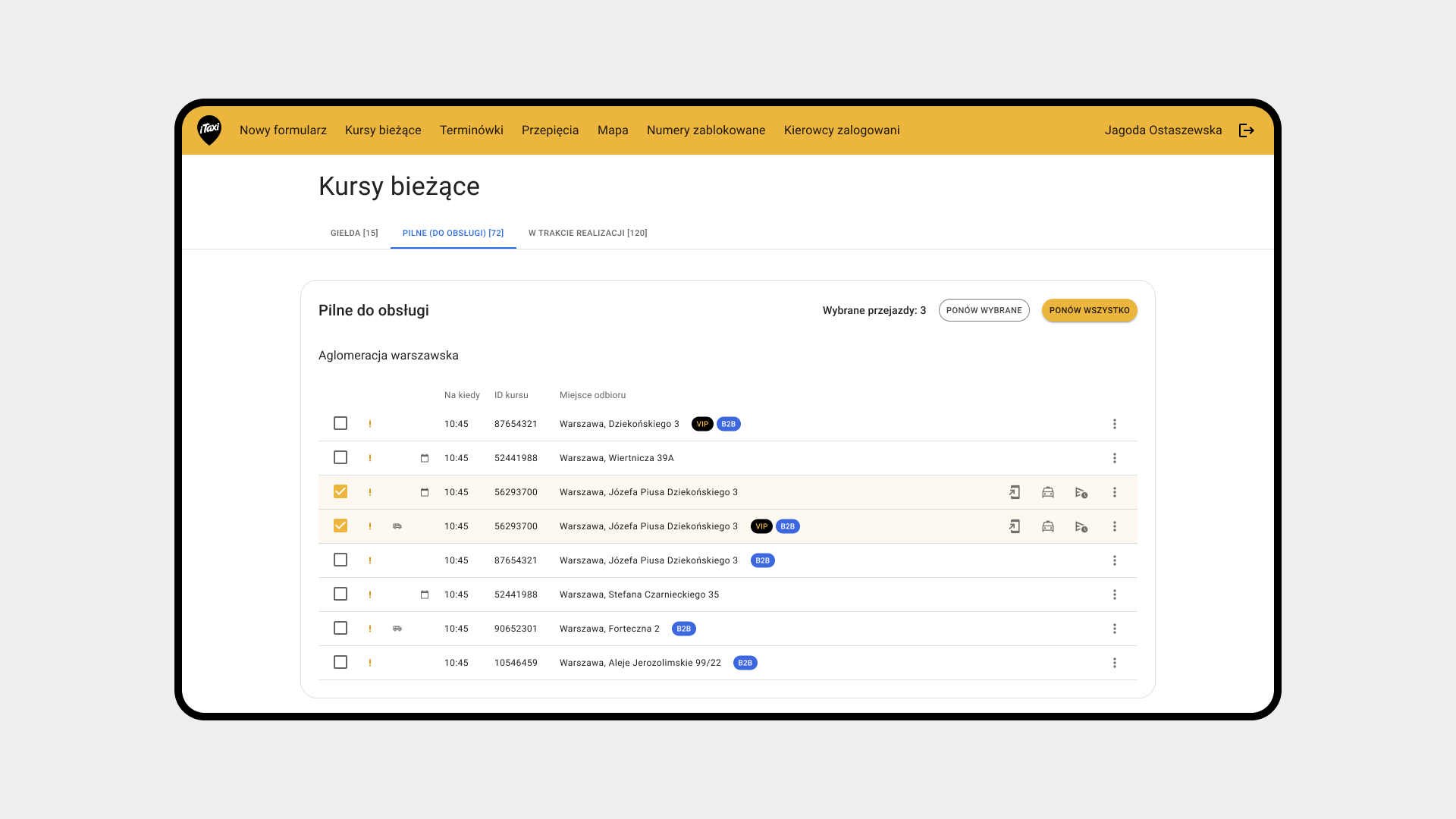
Together with the iTaxi team, we worked to reconcile complex business requirements with the tool’s intuitiveness for current and future head office staff. A key constraint was the need to preserve the existing system logic, so we focused on organising the requirements and designing solutions in line with their priority.
Component development and implementation support
Based on the designed views for all scenarios, the SYZYGY team developed a component library and the front-end logic for the interface. At the same time, we supported the iTaxi development team in implementing these solutions within their environment.
Objectives of the project
The aim of the project was a comprehensive overhaul of iTaxi’s internal operating systems, with a particular focus on the tools used by dispatchers and operators.
The priority was to streamline day-to-day workflows, reduce the number of steps required to process a single order, and eliminate errors caused by an unintuitive interface. The project was also intended to enable the smooth integration of the systems of acquired taxi companies, whose entry into the group had increased operational complexity.
Ultimately, the redesigned tools were intended to reduce passenger processing times and ease the workload on operators.


Challenges
The biggest challenge of the project was not the design of the solution itself, but the organisational and operational context in which the systems operated.
1. Low priority given to internal systems
The modernisation of back-office tools was systematically put on hold in favour of features visible to passengers, which led to a growing technological debt
2. Increasing operational complexity
The company’s growth and the integration of further taxi companies increased the scale and complexity of processes that the existing systems were unable to handle effectively
3. User resistance to change
Working with familiar tools ensured predictability, so the introduction of new solutions carried the risk of a decline in working comfort and the need to change habits
4. The need to maintain operational continuity
the system overhaul had to be carried out without disrupting the day-to-day handling of requests, where speed and reliability are of the utmost importance
Our role


Iterative product development
The project was carried out through close collaboration between the SYZYGY and iTaxi teams, using an Agile approach. We worked in two-week sprints, which allowed us to monitor progress on an ongoing basis and respond quickly to changing business needs.
The scope of our involvement included:
- analysis of operational processes and the work of internal teams
- UX design and optimisation
- creating functional prototypes
- designing user interfaces (UI) for specific features
- development and maintenance of the component library
- customer support at every stage of product development
- monitoring of project implementation and the budget
Technology stack of the project
In this project, we utilised a range of tools and technologies that facilitated both effective team collaboration and the scalability of the solution.
Design and prototypin
Functional prototypes and solution concepts were developed in Miro, which allowed for ongoing validation with the Product Owner and rapid iteration on solutions. The user interface design was created in Figma, using the Material Design library, which ensured consistency and predictability in interactions.
Front-end and architectur
The front-end layer is built using Next.js (React) with TypeScript, which has enabled us to maintain high-quality code and ensure the long-term stability of the solution. We used the Material UI component library to build the interface.
Testing and qualit
An important part of the process was the automated testing carried out using Cypress. The team adopted a test-driven development approach, which helped to improve the system’s reliability and reduce the number of errors during the deployment phase.
Results
Improved operational efficiency
The new control centre panel has enabled the number of bookings handled by a single operator to increase by around 40%. A handling rate of 35 bookings per hour has become the norm, which directly translates into shorter response times, more efficient journey management and greater team capacity — particularly during peak hours.
Faster onboarding of new employees
Simplifying the interface and streamlining processes has reduced the onboarding time for new Customer Care staff to around five days, with the actual onboarding process taking approximately 1.5 days. As a result, iTaxi can scale its operations team more quickly and efficiently in response to growing business needs.

The transformation begins behind the scenes
The collaboration between iTaxi and SYZYGY has shown that improving the customer experience often starts with streamlining systems that ‘simply work’. The project has demonstrated that a partnership model combining external methodology with internal operational expertise enables changes to be implemented more quickly and effectively.
For iTaxi, this was not just a revamp of its tools, but also a significant organisational change – proof that investments in back-end solutions deliver real business value. As a result, an internal UX team was formed, and the new head office dashboard, currently used by over 60 people, is constantly evolving into a comprehensive operations management system.

Optimise your operating system
See how we can streamline your team’s work and improve customer service efficiency. Get in touch with us so we can analyse your processes together and design a solution tailored to your actual business needs.